Embryo Transfer in Australia: What Breeders Need to Know Before You Start
Embryo transfer (ET) is becoming increasingly common in the Australian western performance horse industry, but for many breeders it is still relatively new territory. Whether you’re thinking about offering embryos from a proven mare or looking to purchase one, there is a lot to understand before getting started. ET is already well established in the Australian sport horse industry, so there's plenty of experience to draw on. Before you commit, it’s worth understanding what ET involves, what it can cost and what you need to consider as either a seller or buyer.

What ET actually involves
ET allows a mare to produce a foal without carrying the pregnancy herself. For breeders, that can mean keeping her in competition, producing more than one foal in a season, or both.
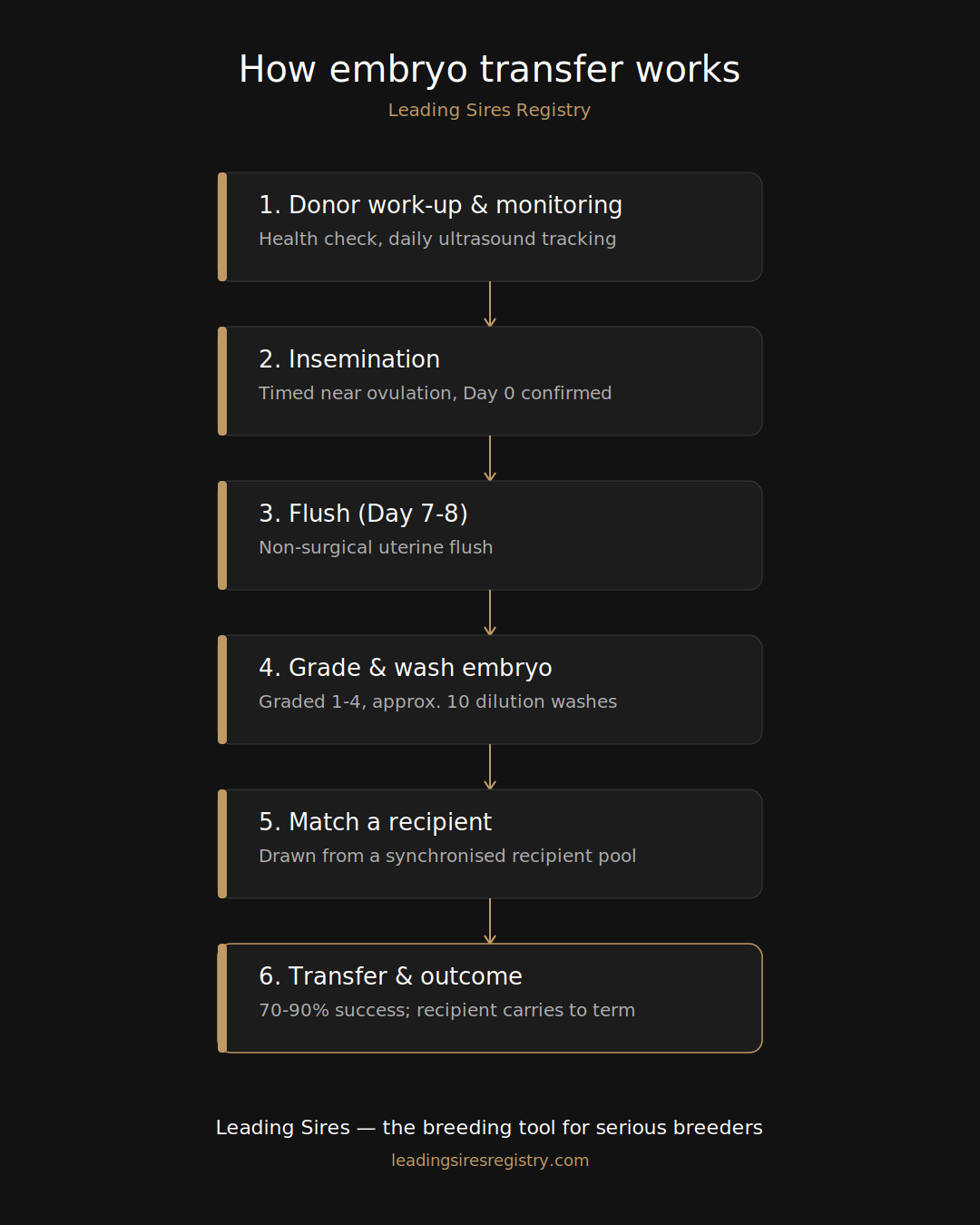
The process follows the donor mare from cycle monitoring and insemination through to embryo recovery and transfer into a suitably sychronised recipient mare.
Setting realistic expectations
Success varies according to a range of factors including the donor mare's age and fertility, semen type and quality, recipient management and the experience of the reproductive team. Nevertheless, published benchmarks give a useful guide:
Embryo recovery rate: typically 40-75%, with young, fertile mares bred on fresh semen at the top end of that range.
Pregnancy rate after transfer: commonly 70-90% with an experienced operator and a well-matched, synchronised recipient.
These figures are important because no ET program can guarantee a foal from a single attempt. That matters just as much to the mare owner deciding whether to offer embryos as it does to the breeder considering purchasing one.
What it costs:
ET isn't cheap, and costs vary between clinics and depending on how many attempts are needed. As a general guide, Australian breeders should allow around $8,000-$10,000 for a 'textbook' procedure, noting that repeat attempts will push the total higher.
The way ET clinics structure their programs also varies. For example, one clinic I spoke with provides the ET service but no longer offers recipient mares. The mare owner either needs to organise a recipient mare or ask the clinic to source one through another provider. Other clinics maintain their own herd of recipient mares, which raises another question - does the recipient stay with the clinic for the pregnancy, or do you bring her home?
These choices affect both the cost and what you need to organise yourself, so it's important to understand exactly what a clinic provides before you start. Costs are typically quoted as separate line items rather than one bundled price.
Broadly, costs include:
vet fees for managing the donor mare
vet fees for the flush and transfer; and
recipient mare costs and ongoing management
Note: If you're buying an embryo, the purchase price of the embryo is additional.
Fresh vs frozen
Fresh transfer generally achieves the highest success rates, but requires a recipient mare ready and synchronised on the day - less flexible, but often the more reliable option when timing allows.
Frozen embryos offer greater flexibility. They can be stored and/or transported without having to synchronise the donor and recipient programs in real time. However, equine embryos are more challenging to cryopreserve than cattle embryos, and success rates are typically a little lower than fresh.
Where to find the right vet
Embryo transfer is specialist reproductive work, so experience matters. Not every equine vet or breeding clinic offers the service, so ask other breeders for recommendations and speak directly with clinics about their ET program.
When speaking with a clinic or reproductive specialist, ask about more than price. Their embryo recovery rates, pregnancy rates following transfer, recipient mare program and experience with the type of semen or embryo you intend to use are all relevant.
Where the Mare Directory fits in
If you're a mare owner considering offering embryos, or a breeder looking for a proven donor mare, the Mare Directory lists ET status, availability and flush history for mares around the world, including here in Australia. Listing is free and gives your mare both domestic and international visibility rather than just local word-of-mouth.
Explore the Leading Sires Mare Directory https://www.leadingsiresregistry.com/en/mares
This article provides a practical introduction to the ET process and what breeders should consider before getting started. For the full clinical detail, reproductive physiology, the research underpinning the figures above and referenced literature, see our complete Practical Guide to Equine Embryo Transfer, available complimentary to Leading Sires members.